Open any beginner book and you will see the same small words again and again: the, was, said, they. Many of these words are hard to sound out, and they make up a big share of what a first grader reads. Learning them by sight frees your child’s attention for the harder, more interesting words in the story.
What the Dolch list is
Edward William Dolch, an educator, published his list of common words in the 1930s after studying the words that appeared most often in children’s books of his day. As Wikipedia describes, the list contains 220 service words, plus 95 common nouns, and it is split into levels from pre-primer through third grade. The first-grade list has 41 words, including after, again, give, just, once, and round.
Teachers use the term “sight words” for words a child recognizes instantly, without sounding them out. Some Dolch words are perfectly decodable, such as and or it, while others, like was or said, break the usual rules. Both kinds deserve practice until they become automatic.
Why five words a week works
Trying to learn twenty words in one weekend leads to tears and forgetting. Five words a week is gentle. With 41 first-grade words, you will finish the list in roughly eight or nine weeks, and you will have time to revisit older words along the way. Ask your child’s teacher for the exact list used in class, since schools often make their own adjustments.
A ten-minute evening plan
Monday: meet the words
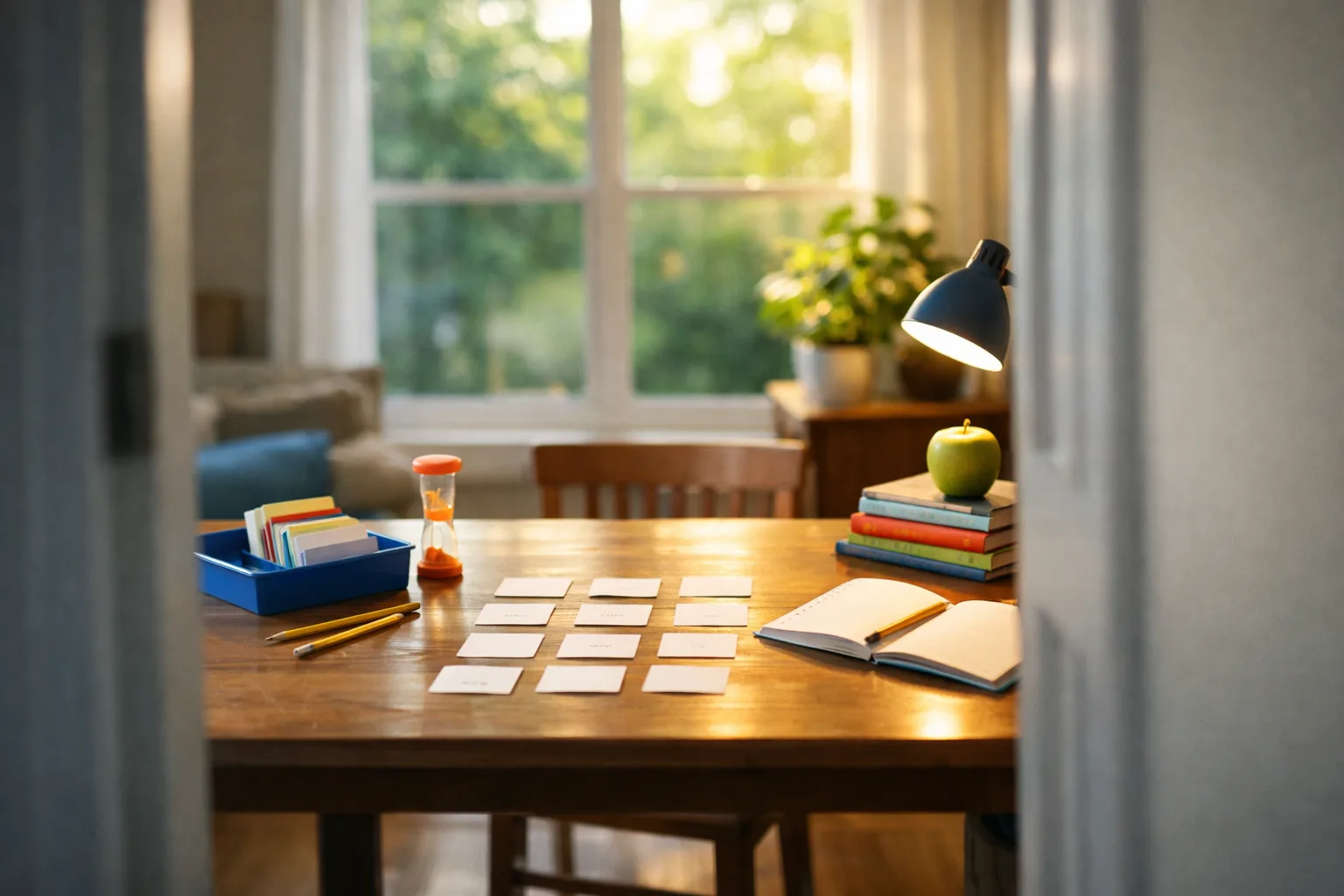
Write the five new words on index cards in clear lowercase letters. Say each word, have your child repeat it, and use it in a sentence. Then have your child trace the word with a finger while saying it, and finally write it once on a small whiteboard or scrap paper.
Tuesday and Wednesday: play with the cards
Short games keep things fun:
- Flash and flip. Show a card for two seconds. If your child reads it quickly, it goes in the “know it” pile. If not, it goes in the “still learning” pile.
- Memory match. Make two cards for each word, turn them face down, and match pairs while reading each word aloud.
- Word hunt. Hide the cards around the room. Your child finds one, reads it, and brings it back.
Thursday: find the words in a real book
Pick an easy reader and ask your child to find this week’s words on the page. Give a small sticky note or a paper clip to mark each one. Seeing the words in a story shows why they matter.
Friday: quick review and celebrate
Go through all five cards plus a handful from earlier weeks. Praise effort more than speed. If a word is still shaky, carry it into the next week’s set rather than rushing on.
Tips that make practice stick
- Keep each session under ten minutes. Short and daily beats long and rare.
- Use a small box to store mastered words and revisit them once a week so they do not fade.
- Say the word, then have your child say it, rather than asking “What does this say?” over and over. Modeling reduces frustration.
- Do not make your child guess from the first letter or from a picture alone. Encourage looking at every letter.
Sight words are one piece of reading, not the whole picture. Pair them with sounding-out practice and plenty of read-aloud time. If you want ideas for the writing side of word learning, the Writing and language section has spelling routines that use the same words.
If your child still mixes up many common words after a few months of steady practice, talk with the teacher. Every child moves at a different pace, and an early conversation can bring extra support.
Leave a Reply