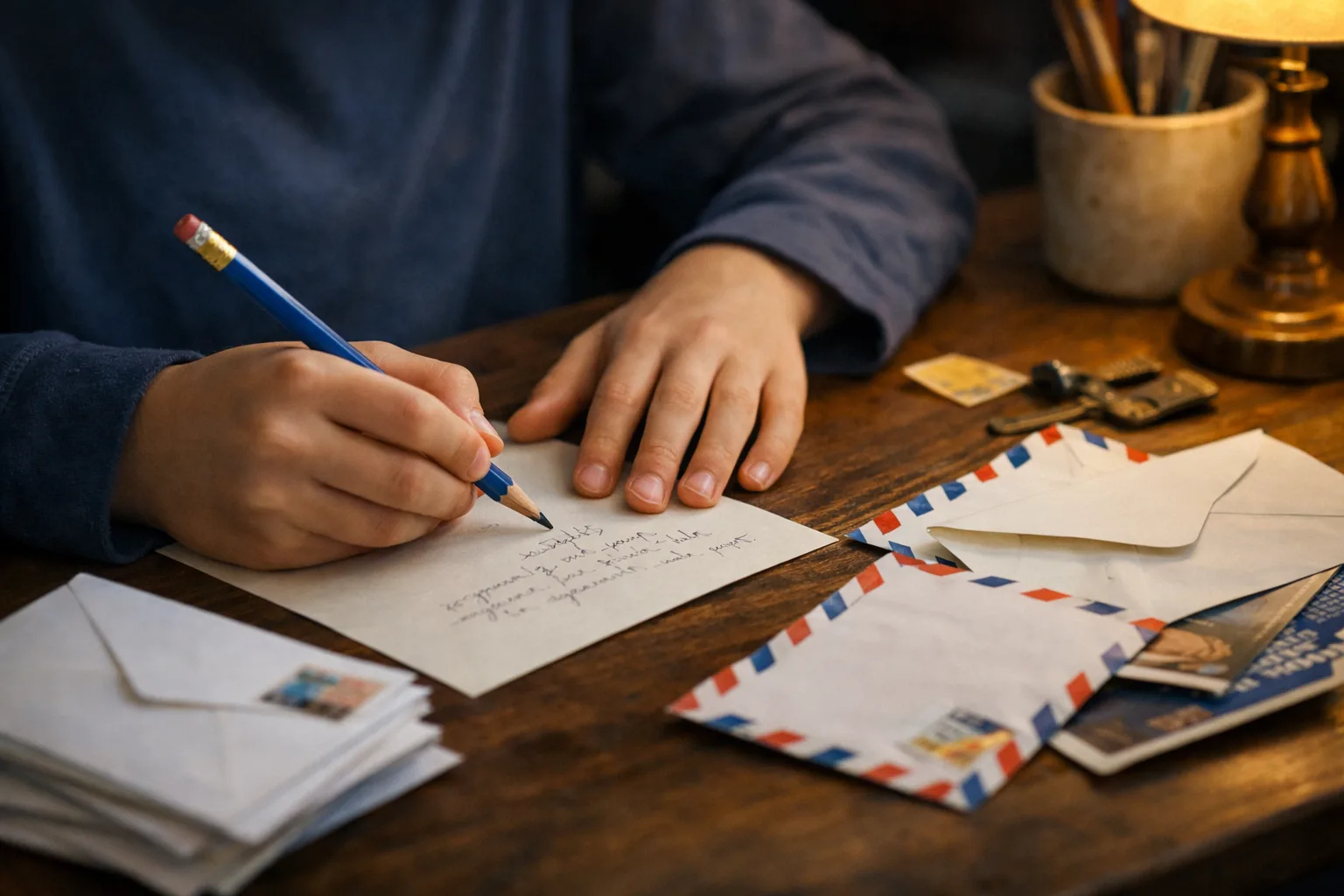
In a world of texts and emojis, a handwritten letter in the mailbox feels like a small miracle to an eight-year-old. A pen pal project gives your child a real reason to write, a real reader, and a lesson in patience that no app can offer. It also fits nicely into the third-grade writing skills of structuring a letter, using complete sentences, and writing for a purpose.
Choose a pen pal
The safest and easiest pen pals are people you already know. Good choices include a grandparent, an aunt or uncle in another state, a cousin, or a friend who moved away. A faraway relative adds a fun geography angle, since your child can find the state on a map and track how far the letter travels.
It is best to avoid matching your child with strangers online. If your child’s teacher runs a class exchange, that is a trusted setup, because adults supervise both ends. Whatever you choose, an adult should read all letters before they are sent and after they arrive, and your child should never share a home address with someone you do not know.
The parts of a friendly letter
Teach your child to build a letter in five parts, and write them on a sample page so the structure is easy to see:
- Date. Written at the top right, such as “October 12, 2026.”
- Greeting. “Dear Grandpa Joe,” followed by a comma.
- Body. Two or three short paragraphs. Tell something about yourself, ask a question, and answer a question from the last letter.
- Closing. “Your friend,” “Love,” or “Sincerely,” followed by a comma.
- Signature. The child’s name, written by hand.
Third graders can often fill a half page or a full page, depending on the child. If a blank page feels scary, offer a list of starters: “This week I learned…”, “My favorite thing at school is…”, “Something funny that happened was…”.
Address the envelope
This is a practical skill many adults wish they had learned earlier. On the front of the envelope, in the center, write the recipient’s name, street address, then city, state, and ZIP code. In the top left corner, write the return address, which is your own. The U.S. Postal Service uses ZIP codes to sort mail, so it helps to write the numbers clearly, and the two-letter state abbreviation is standard.
The stamp goes in the top right corner. A Forever stamp can be used on a standard letter no matter what the price of first-class postage is later, so you do not have to hunt for extra pennies when rates change. Let your child choose a stamp design and stick it on, and then walk or drive to a mailbox together. Dropping the letter in the slot is a tiny ceremony, and your child will remember it.
Wait for the answer
Letters can take several days to arrive, and a reply takes longer, which is the lesson. Mark a calendar with the day you mailed the letter and make a guess together about when the answer might come. Some families make a small “mailbox check” part of the afternoon routine, and the first reply almost always creates a rush of excitement.
When a letter arrives, read it aloud together, then ask your child to respond to at least one thing the pen pal said. That is how conversation works in writing, and it is the same skill used in book reports and class discussions.
Keep it going
A pen pal project can last a month or a year. Some families send a letter every other week. Others pick a special occasion, such as a birthday or the start of summer, to write. Keep copies or photographs of the letters in a folder so your child can see their writing grow over time.
For more writing practice with a purpose, browse the homework and study help section. And if your child’s handwriting needs help, remind them that a letter is a chance to practice neat letters for someone special. Many kids work harder on handwriting for a grandparent than for a teacher.
Leave a Reply