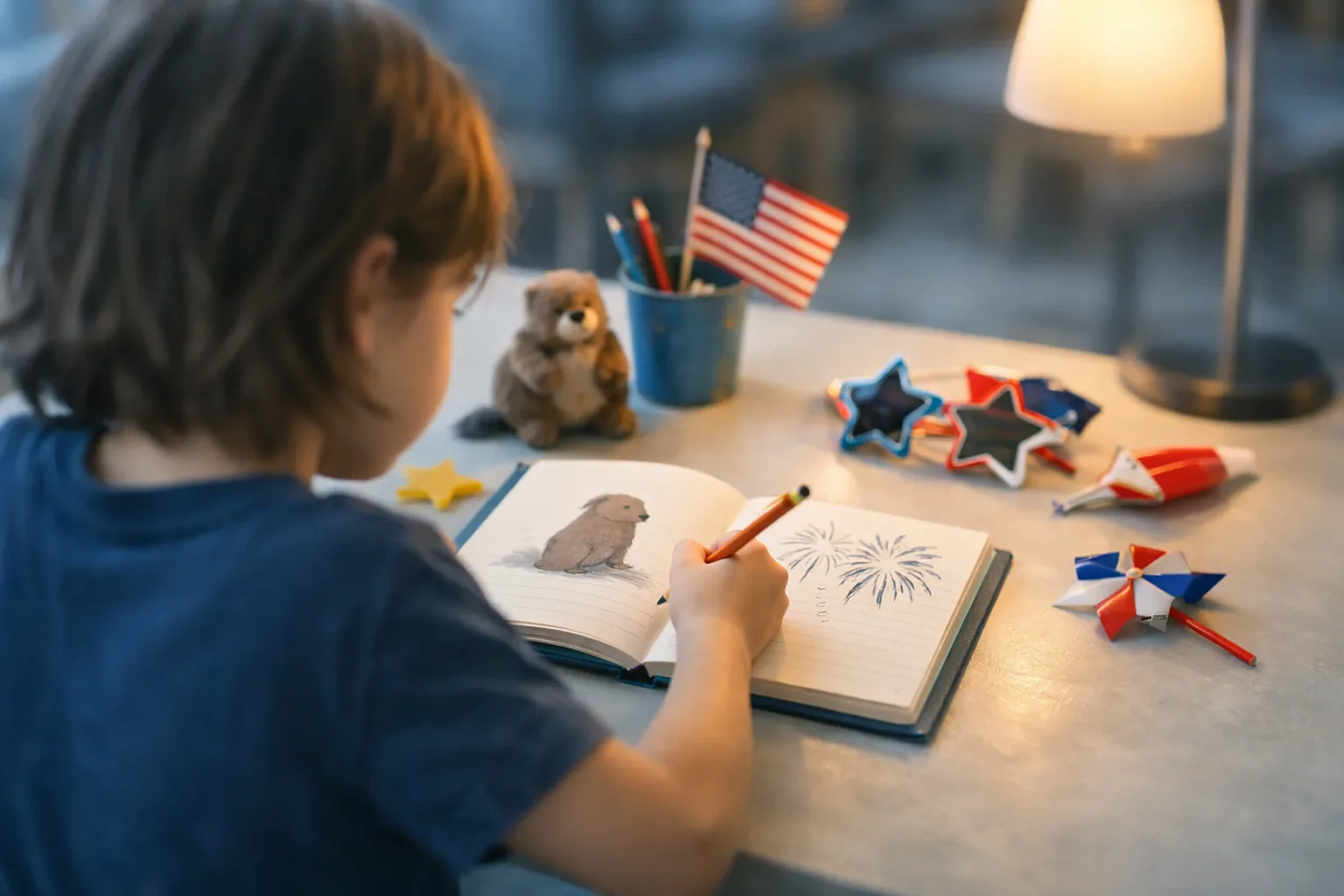
A blank page is the hardest part of writing. Children who say “I don’t know what to write” usually have plenty to say, but they need a place to start. Tying prompts to events your child already knows, such as Groundhog Day or the Fourth of July, takes care of that problem and also builds a bit of cultural knowledge along the way.
The table below gives you one prompt for each month of the school year. Each also names a type of writing, so over time your child tries stories, opinions, and informational pieces, all of which show up in elementary school writing standards. For general information on what schools expect, the U.S. Department of Education site is a reliable starting point.
A prompt a month
| Month | Occasion | Prompt | Type of writing |
|---|---|---|---|
| September | Labor Day | What job would you like to try for a day, and what would you do? | Narrative |
| October | Fall leaves | Describe a walk on a day when the leaves are changing color. | Descriptive |
| November | Thanksgiving | Write a thank-you letter to someone who helped you this year. | Letter |
| December | Winter break | Explain how to make your favorite winter treat, step by step. | How-to |
| January | New Year | Choose one goal for the year and explain why it matters to you. | Opinion |
| February | Groundhog Day | Will the groundhog see its shadow? Write your own forecast and tell why. | Opinion |
| March | First day of spring | Write about the first sign of spring you notice outside. | Informational |
| April | Earth Day | Write three things your family can do to help the planet. | Informational |
| May | Memorial Day | Interview a grown-up about a family tradition and report what you learned. | Informational |
| June | Last week of school | Write a story about the funniest thing that happened this year. | Narrative |
| July | Fourth of July | Describe a perfect summer picnic using all five senses. | Descriptive |
How much should your child write?
Length varies from child to child, and a long piece is not always a better piece. Treat these as rough starting points:
- Kindergarten and grade 1: a drawing and one or two sentences. Invented spelling is fine.
- Grades 2 and 3: a short paragraph of four to six sentences with a clear beginning and ending.
- Grades 4 and 5: two or three paragraphs, with details and a reason or example for each main point.
If your child freezes, say the answer out loud first. Many kids write more easily after they have told you the story. You can also set a timer for ten minutes and promise that the only rule is to keep the pencil moving.
Using the prompts well
Do not correct every mistake. Choose one thing to talk about, such as capital letters at the start of sentences, and leave the rest for another day. Ask a question instead of giving a grade: “What happened next?” or “How did that smell?” The questions often lead to the best sentences.
It also helps to write alongside your child. When you read your own two sentences aloud, you model the idea that writing is something everyone does and shares. Keep finished pieces in a folder or a simple binder, and by July your child will have a year’s worth of writing to look back on.
For related support, our homework and study help section has ideas for building routines that make short writing sessions easier to keep up, even on busy weeknights. And if your child is a reluctant writer, try the prompt as a conversation at dinner first, then send them off to write what they said.
Leave a Reply