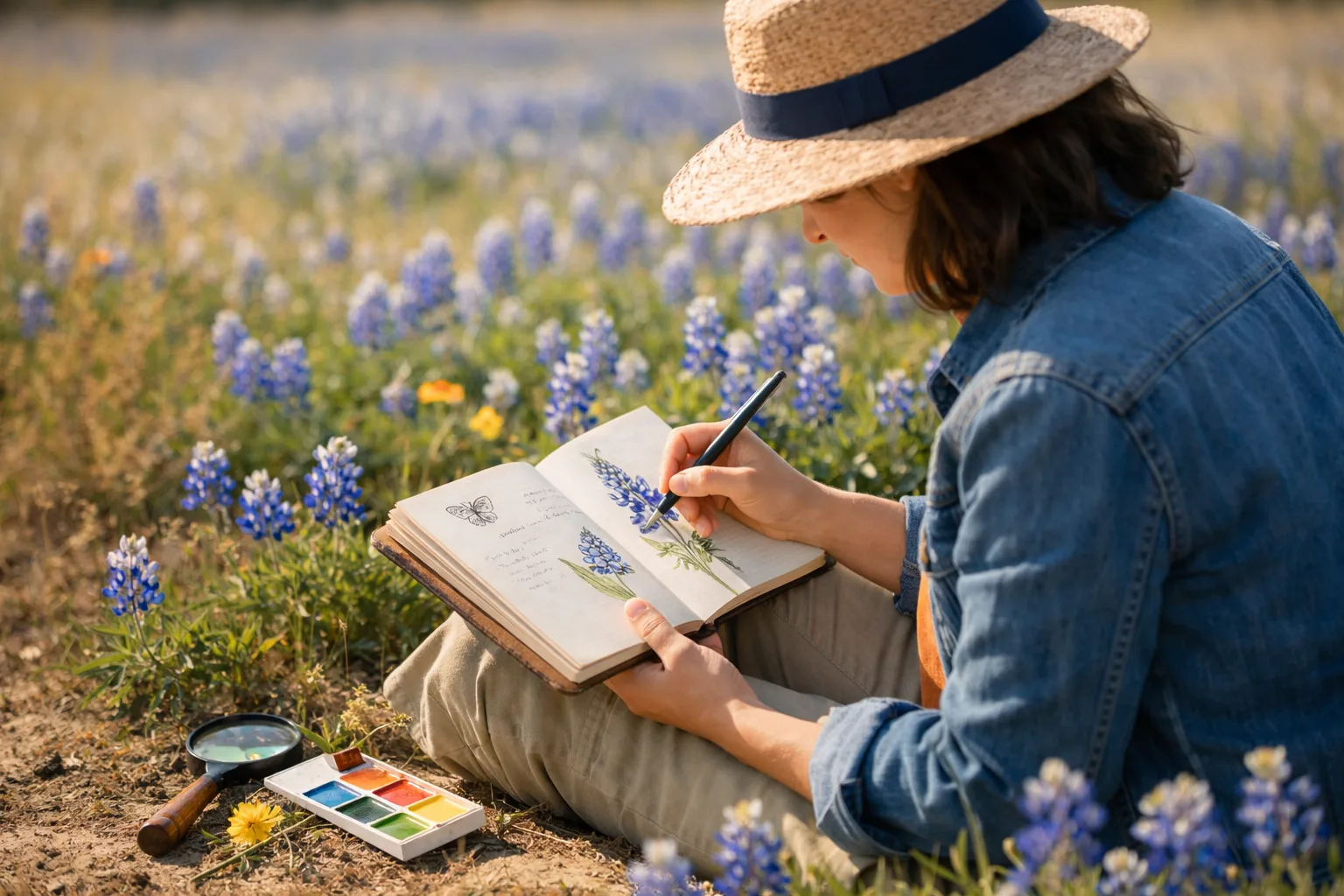
Every spring, roadsides and pastures across Texas turn blue and purple, and the Texas bluebonnet gets most of the credit. It has been the state flower since 1901, and families have been posing children in the middle of it for generations. But a wildflower walk can be more than a photo. With a notebook and a few good questions, it becomes one of the easiest science lessons you will ever run, and your child will not even notice it is a lesson.
When and where to go
Bluebonnets usually bloom from about mid-March through April, with the peak depending on winter rainfall and temperatures. A wet fall and a mild winter tend to make a good season, but nobody can promise a carpet of blue. Check local news or a park’s social media page for bloom updates the week before you go.
The Texas Hill Country, the rolling limestone region west of Austin and north of San Antonio, is famous for wildflower drives and state parks. You do not have to drive far, though. Many towns have a nature trail, a city park, or a library garden where wildflowers come up on their own. A shorter walk close to home is better than a long drive that ends with a tired, hungry child.
Wherever you go, bring water, sunscreen, and a hat, because spring afternoons in Texas can already feel hot. Wear closed-toe shoes. Wildflower fields are also home to fire ants, and tall grass can hide the occasional snake, so stay on paths and keep your eyes on where you step.
What goes in the nature journal
You do not need anything fancy. A plain notebook with unlined pages, a pencil, and a small set of colored pencils will do. A clipboard makes drawing on the move much easier. Ask your child to put the same four things on every page:
- The date and place. “April 6, Hill Country trail, sunny, windy.”
- A drawing. One flower, drawn slowly, is worth more than a quick sketch of the whole field.
- Labels. Petals, stem, leaves, and anything else your child can name. Invented names are fine at first.
- One question. Something they still wonder about when they leave.
Younger children in kindergarten and grade 1 can draw and dictate a sentence for you to write. Second and third graders can write their own captions. Fourth and fifth graders can add measurements, such as how tall the flower stands in inches, and begin comparing one day’s journal with another’s.
Observation questions that work
Good questions do not have one right answer. They send a child back to look again. Try a few of these, and then stay quiet while your child answers:
- How many petals can you count, and how are they arranged?
- What shape are the leaves? Do they grow in pairs, or alone?
- What colors do you see besides blue? Is the tip of the flower cluster a different color from the base?
- Who else is visiting this flower? Look for bees, butterflies, and beetles.
- Is the flower standing straight or leaning? Where do you think the wind comes from?
Bluebonnet clusters are a nice case study because the lower petals on each tiny bloom are blue and the tip of the cluster is often white. Many local guides mention that the white tip can turn reddish-purple as the flowers age. Ask your child to check whether that is true on your walk rather than telling them the answer.
Respecting wildflowers
A field of flowers is a living place, and a few habits keep it healthy for the next family. Teach them as part of the lesson:
- Walk around the flowers where you can, and avoid trampling patches of seedlings.
- Leave the flowers where they are. Wildflowers have to drop seed to come back next year, so a picked bouquet means fewer flowers later.
- Stay out of fenced pastures and private land unless the owner has welcomed visitors, and stay away from roadsides with fast traffic.
- Take trash home. A bag in your backpack is enough.
If your child wants to keep a memory, press a flower that has already fallen, or take a photo from the same spot each week to see how the field changes.
Keep going after the walk
Back at home, let your child choose their best drawing and add color from memory. Then look up the flower together in a library field guide. For a reliable general reference, the National Park Service site has plenty of material on native plants and how parks protect them. Over the following weeks, you can return to the same spot and watch the blooms fade into seed pods, which is a lesson in plant life cycles that no worksheet can match.
If you want to practice measuring, our math at home section has ideas for turning flower heights into simple bar graphs. By the end of the season, you will have a notebook of real observations, and a child who looks a little longer at everything green.
Leave a Reply